|
RustedRail's Ramblings is where I share some of my favorite photos along with other thoughts on life.
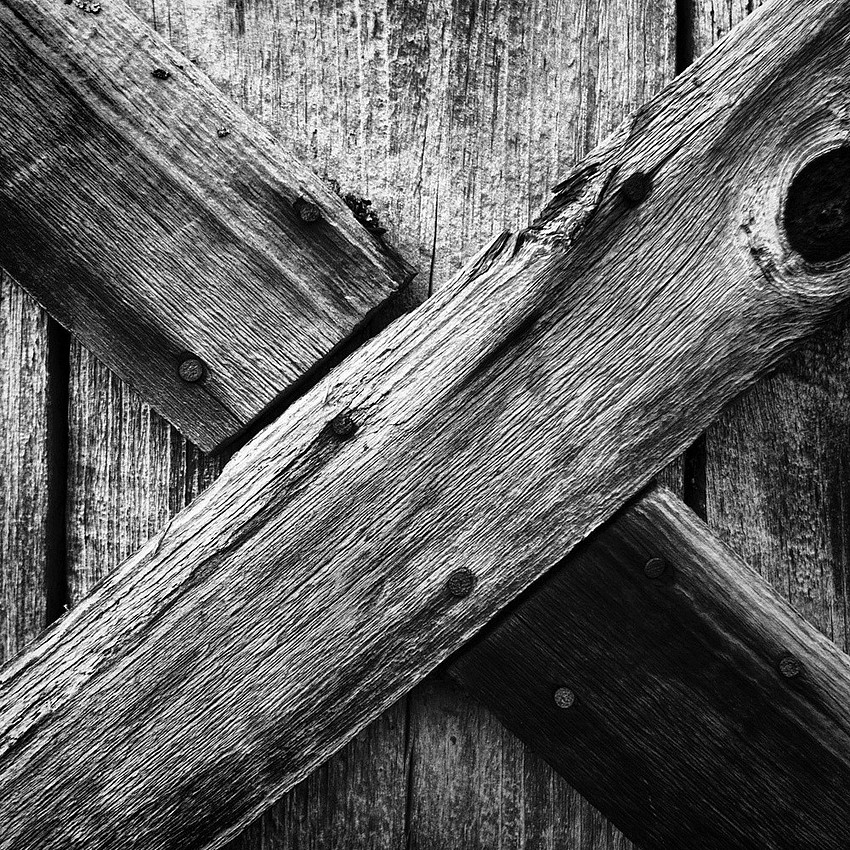
X marks the spot
There is something about old barns that has always appealed to me. Even as they age, it is easy to see the craftsmanship which went into building them. A barn was critical to the life of the rural farm as protection for animals and equipment. For many years, they were lovingly cared for. Getting a new coat of paint and repairs done. As the farms were abandoned, the barns were left to the elements.
I love the textures of the weathering wood. Each board ages differently and the look changes over time. The rust of the nails, the slow decay. Until one day, the barn collaspes.
Grade Crossings... Look, Listen, Live.
Grade crossings are a constant source of danger along the tracks of US railroads. Many crossings are only protected by signs, while busier ones might add lights or gates for extra protection. 💡 What are the facts?
What can you do if you are stuck on the tracks to save your life? 💡 What to do in an EmergencyIf a vehicle stalls or is stuck on a track:
There are a lot of resources in South Carolina for improving grade crossing safety. 🛡️ Safety Initiatives & Education
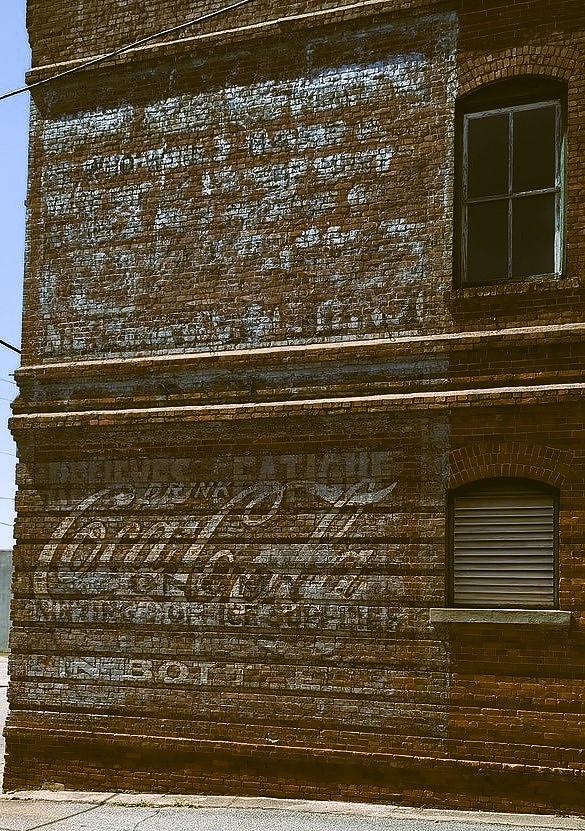
Privilege Signs and the Ghosts Left Behind.
I'm a huge fan of Coca-Cola ghost signs which were painted advertising in most southern US towns. Many of them have completely faded away, been painted over, or worse yet "restored" which to my thinking is a worse fate. Here is some history about the signs themselves from my research lately. Coca-Cola and the "Privilege Sign"Coca-Cola has deep roots in the South, and its wall signs are the most ubiquitous ghost signs in South Carolina. This was the result of a brilliant marketing strategy pioneered by the company's early leadership. Coca-Cola utilized a concept called the "Privilege Sign." The company would approach local South Carolina merchants—pharmacies, corner groceries, and general stores—and offer to paint the entire side of their brick building for free. The catch? The top or bottom fraction of the wall would feature the name of the local store (e.g., "Smith's Pharmacy"), but the vast majority of the wall would be dedicated to a massive Coca-Cola advertisement. This allowed Coca-Cola to plaster its brand across every small town in South Carolina while endearing itself to local business owners. The Palimpsest EffectIf you look closely at the image, you can see faint, blocky lettering behind and above the Coca-Cola script. This is known as a palimpsest—a surface where older writing has been painted over but remains partially visible. In South Carolina's growing downtowns, prime wall space was frequently leased and re-leased. A wall might advertise a local livery stable in 1890, be painted over for a local hardware store in 1905, and then painted over again by a national brand in 1920. As the top layers of paint weather away, the different eras bleed into one another, creating a layered historical document of the town's commerce. The Era of the "Walldogs"From the late 19th century through the 1950s, before the advent of vinyl billboards or digital advertising, the sides of commercial brick buildings were prime real estate. The men who painted these massive advertisements were affectionately (and sometimes derisively) known as "Walldogs." These artisans were often itinerant, traveling from town to town across South Carolina. They dangled from the sides of three-story buildings on simple wooden swing stages (scaffolding), braving the sweltering Southern heat. They mixed their own paints on-site, relying heavily on white lead paint. This lead base is the exact reason these signs still exist today; while the vivid pigments (like Coca-Cola's signature red) eventually washed away in the rain and sun, the lead strongly bound itself to the porous masonry, calcifying and leaving a permanent "ghostly" imprint on the brick. The legacy here in South CarolinaJim Harrison, who lived in Denmark, South Carolina is famous not only for his start painting walls and barns, but later as a painter who captured these in paintings and calendars for the Coca-Cola company. You can visit his museum and see more of his art on his website https://jimharrison.com/
Looking forward 2026
I'm excited to have a return trip planned to Charleston and the USS Yorktown in early May. Patrice and I haven't been down there in years and I'm looking forward to the chance to get to walk around downtown and take some new photos of the area as well as returning to the Yorktown to make some updated images. Hopefully the wind and clouds cooperate as well as they did on our first trip in May years ago!
The US Yorktown is now a museum in the Charleston, South Carolina area. Patriot's Point is a fascinating place to visit with a large collection of aircraft as well as a look at life on a World War II era Aircraft Carrier.
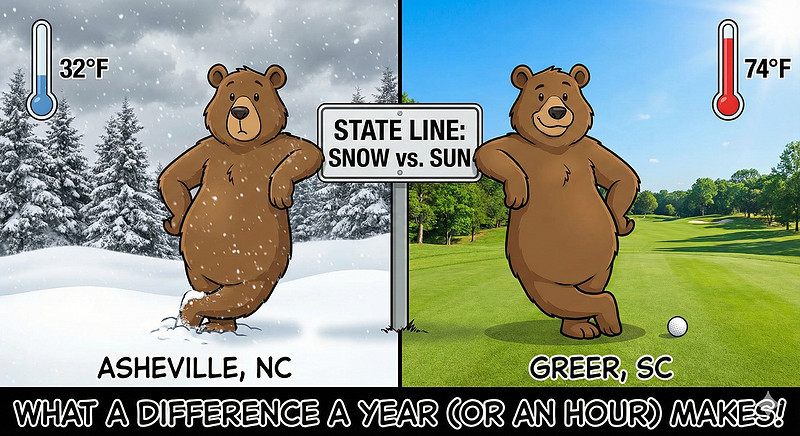
What a difference a year makes.
What a difference a year makes sometimes. My wife Patrice reminded me that last January 7th, 2025 we had a snowfall (first since we have moved to South Carolina) and this year we broke the record high temperature at 74F. We have not had any snow down here in Greer this year, but up in Asheville, North Carolina and up on the Blue Ridge they have had several snow events just about an hour away. When we lived in Atlanta, we could usually count on at least a dusting every year, so far here.. its like a crap-shoot it seems. I'm that person who checks the weather forecast multiple times a day usually. Even with new technology, I've learned that weather predictions (especially in the 10-14 day long range forecast) are just that, because things change day-to-day. How much it changes from what the experts and the models are predicting now, to what really happens two weeks from now are good reminders of how hard it really is even to predict what is going to happen in the short-term let alone in a long term forecast. What applies to the weather, also applies to the other things we predict in the long-range. Everything from who will win the World Series this year in Baseball (maybe it will finally be the Padres year??), to who will win the Presidential Election in 2028, or what will the economy do in the next six months. In our own personal lives, it is important to make plans for the long-term goals we have, but also to realize that things are going to change between now and then and that they have to be modified based on actuality. Those adjustments are the difference between the "long-range models" and is it raining today.
« Older Posts
© Rusted Rail Images - Gene Bowker
|